


- INTERVIEW
Interview with Süddeutsche Zeitung
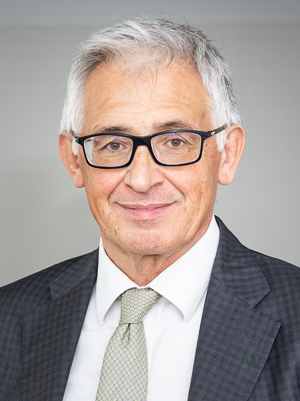
Interview with Piero Cipollone, conducted by Markus Zydra and Meike Schreiber on 15 January 2026
26 January 2026
Mr Cipollone, if you had 20 seconds to explain the greatest advantage of the digital euro, what would you say?
Quite simply: it’s easy. You can use it everywhere – in Germany and across the entire euro area.
Even in a small French bakery out in the countryside and even if I don’t have a smartphone?
Yes. Every retailer who accepts digital payments today will in future be required to accept the digital euro as well. And retailers will be pleased, because fees will fall significantly – after all, the ECB is providing the infrastructure.
But do I really need a digital euro for that? Can’t I also pay by card or cash?
Of course. By definition, cash cannot be used to pay digitally, for instance for online shopping. And when you pay by card, you often incur account fees. The digital euro, by contrast, will be free for basic use. It will be like cash, but in digital form. We’re simply creating an additional option. Coins and banknotes will still be available; no one will be forced to switch.
Where is my digital money kept?
In the servers of the Eurosystem or on your smartphone. You can also download your digital euro to a card bearing the digital euro logo.
And if my phone or card is stolen, is the money gone?
No, the money on your account is safe and you will be able to access it from other devices – the thief won’t be able to spend it. Only the money you have downloaded to your wallet for offline use is stored on the device. In this case, losing your phone or card would be like losing your physical wallet, where only the money that’s actually inside would be gone. Of course, you’ll be able to block your device or card, and if they are found, you would recover the money stored on it. But let’s not forget: the digital euro also has strategic significance.
What do you mean by that?
You are not only a consumer, but first and foremost a citizen of Europe. Don’t you feel safer knowing that the money you pay with every day is based on European technology, meaning it is in European hands and does not depend on third countries?
Why does that matter?
Think of the judges of the International Criminal Court who were sanctioned by the United States simply for doing their job. Their US cards were cut off – limiting their ability to pay across Europe, because they were blocked by Visa and Mastercard. With a digital euro they could have continued to pay throughout the euro area.
In Germany, at least, there are other bank cards.
Yes, but German cards rely on international card schemes when they are used in other euro area countries or for online payments. And in 13 countries of the euro area there is no domestic payment system. In Austria, for example, you can either pay in cash or use US cards. It’s similar in Spain or Finland.
So what needs to happen?
We need a digital equivalent to cash: the digital euro.
What are the practical reasons for the digital euro?
Around one third of all payments today are made online and you obviously can’t use cash when buying from online retailers. So public money, which currently only exists as physical cash, doesn’t cover this area that is central to our lives. Even at the supermarket, shoppers paying with cash often have to wait longer at the checkout. People who want to pay with public money are thus at a clear disadvantage, unless we create a digital form of cash. This is why, alongside banknotes and coins, we need the digital euro.
What else is needed?
The digital euro must be usable everywhere. Retailers need to accept it, and banks must be able to exchange payments between their systems. In other words, we need the “pipe” – the payment infrastructure, and the “liquid” – the money that flows through it. The digital euro will provide both.
Doesn’t that turn the ECB into a competitor for private providers?
Just the opposite. The digital euro creates a European standard. Thanks to the joint infrastructure, providers such as the new payment service Wero – an initiative of a group of European banks – could operate everywhere in Europe. It’s like a public rail network where rail companies can put their trains on it and get to any destination. This network will make it easier for European private payment solutions to scale up and be accepted throughout the euro area.
Does that include Visa, Mastercard and PayPal? If it does, the power will stay in the United States.
Today US corporations own critical parts of the infrastructure and, in theory, they could cut us off. With a European infrastructure, we would own the “rails”. If one provider dropped out, Europe would have enough alternatives left.
And yet, there is a lot of distrust of the project. Some have compared the debate to that about mandatory COVID vaccinations. Why is that?
Because of all the disinformation. Some are claiming that the ECB wants to control what people spend their money on. It is nonsense.
But you are looking into “conditional” payments.
Yes, but this has nothing to do with programmable money. Conditional payments are automatic payments that are set by the payer. And they are commonly used already. For instance, when you set a monthly transfer for your rent, you make a conditional payment – the payment is conditioned on time as the rent is automatically paid on the same day every month. With the digital euro, people and firms will be able to use conditional payments in more ways, for instance to automate refunds.
But they can be abused, for example to block purchases.
No, every digital euro is of fully equal value, and everyone will be free to decide how to use it. Conditions on a payment can only be set by the payer and payee – for instance: “The ticket will only be paid for if the train runs”.
Can you block certain purchases with the digital euro?
No, the Eurosystem doesn’t have the authority or power to block anything. When a payment is initiated, we reserve the amounts, but do not track individual monetary units. To be able to control the spending, you’d have to mark each digital “banknote”. Then the retailer could say, “Sorry, you can’t use this to buy that product, this money is earmarked for food”.
Like food coupons after the war?
Neither the ECB nor anyone else will be able to mark digital euros like that. We only record the transaction amount and the encrypted codes of the payer and the payee. But we don’t know who they are, or what they are using their money for. To us, they are anonymous.
Many people still fear a “transparent citizen”.
Nobody will be made to use the digital euro, and people will still be able to use cash or any other means of payment. Besides, for years the ECB has been running large systems, such as TARGET Instant Payment Settlement, which manages eight to ten million transactions every day – also for Sweden and Denmark which aren’t even in the euro area – and it has reliably fulfilled its data protection obligations.
The digital euro is supposed to also work as an offline payment method, without internet connection. What is the advantage of that?
It can be used in all circumstances – even in remote areas and in the case of outage. Moreover, when you pay offline with the digital euro, not even your bank knows who sent the money to whom.
But it does get recorded once you’re back online, doesn’t it?
It’s like your wallet: first you need to put money in there, then you can use it. But once the money is there, the privacy is like that of cash: if I pay you €100 offline, the transaction is not recorded. It stays private. You can then replenish your online account when you connect. It works almost like cash.
Some Members of the European Parliament are sceptical of the digital euro. A pilot exercise will start next year but issuance is expected in 2029 at the earliest, and in the meantime, the pressure from the United States is mounting. Is it all going too slowly?
If the law was passed today, retailers and IT service providers would start implementation immediately. As soon as the rules are set, the digital euro standards will be available to everyone and retailers will prepare to be “digital euro-ready”. That means that European private payment solutions will be able to use the free digital euro standards to expand their business, even before the digital euro is issued. Every delay makes us more reliant on foreign payment systems.
Euroopan keskuspankki
Viestinnän pääosasto
- Sonnemannstrasse 20
- 60314 Frankfurt am Main, Germany
- +49 69 1344 7455
- media@ecb.europa.eu.
Kopiointi on sallittu, kunhan lähde mainitaan.
Yhteystiedot medialle